In this guide
Key takeaways
- Treat enterprise ChatGPT Ads as a governed media channel, not a simple campaign setup: eligibility, brand safety, approvals, measurement and ownership all need agreeing before launch.
- Separate legal, brand and media approvals, document who owns each decision and run UK and US activity as separate operational problems where needed.
- The guide includes a client, agency and platform responsibility matrix and an enterprise vendor evaluation checklist for procurement.
Enterprise ChatGPT Ads works best when it is treated like a governed media channel, not a simple campaign setup. The real risks are eligibility, brand safety, approval flow, measurement discipline, and unclear ownership between client, agency, and platform.
What matters most is simple:
-
confirm eligibility before launch
-
separate legal, brand, and media approvals
-
agree what the platform can and cannot measure
-
document who owns each decision
-
run UK and US activity as separate operational problems where needed
Who this guide is for: CMOs, Paid Media Directors, Heads of Growth, procurement leads, legal stakeholders, and brand teams evaluating or managing ChatGPT Ads at scale across the UK, US, or both markets.
ChatGPT Ads launched in the United States on 9 February 2026, expanded to the United Kingdom on 11 August 2026, and opened self-serve access via the ChatGPT Ads Manager to US businesses on 5 May 2026. The platform is active and growing. The governance infrastructure around it, inside most enterprise organisations, is not.
When ChatGPT Ads Is Relevant for Enterprise Teams
ChatGPT Ads places sponsored content inside conversational AI responses for logged-in adult users on the Free and Go subscription tiers. According to OpenAI's Help Centre, paid tiers (Plus, Pro, Business, Enterprise, and Education) do not show ads. Ads are matched to the topic of the current conversation, past chats, and prior ad interactions — not through third-party cookies or cross-web behavioural tracking.
This matters for enterprise buyers for a specific reason: the audience seeing ChatGPT Ads is, by definition, an audience actively using AI to research, compare, and make decisions. That is a fundamentally different context from a display impression or a social scroll.
When the channel is worth evaluating
Enterprise teams should consider ChatGPT Ads when:
-
Their target audience uses ChatGPT to research purchase decisions, evaluate providers, or compare products
-
They operate in a category currently eligible under OpenAI's Ad Content Policies
-
Their legal entity is based in a market where the Ads Manager is available (currently the US, UK, and a small number of other markets)
-
They have the internal capacity to manage brand safety, creative approval, and measurement governance across markets
Surgelify observation: The channel is not suitable for every enterprise advertiser. Organisations in heavily regulated sectors — financial services outside the US, healthcare outside the US, legal services outside the US — face significant category restrictions that require individual assessment before any budget commitment.
What the platform is not
ChatGPT Ads are a paid channel that operates entirely separately from the organic responses ChatGPT provides. Advertising spend does not influence the answers ChatGPT gives users. OpenAI's ad policies state this explicitly: "advertising does not influence the answers ChatGPT provides." Any agency that implies otherwise is misrepresenting the platform.
How to Evaluate a ChatGPT Ads Agency
Most agencies claiming ChatGPT Ads expertise have had access to the self-serve platform for a matter of months. Enterprise procurement teams should apply the same rigour they would to any new media partner, with additional scrutiny in five specific areas.
Platform knowledge and policy literacy
An agency must demonstrate working knowledge of OpenAI's current ad policies, not a summary of them. Ask them to walk through the eligibility assessment for your specific product, legal entity, and target market. Ask how they handle policy updates, which OpenAI issues without fixed notice. If an agency cannot explain the difference between a category that is "allowed," "restricted to select approved advertisers," and "not allowed," they are not ready to manage enterprise accounts.
Market availability and category eligibility
These are two separate questions, and confusing them is a common error. A legal entity may be in a market where the Ads Manager is available, but the product category may still be restricted. Both conditions must be satisfied independently.
Surgelify recommendation: Before any agency engagement, complete a written eligibility assessment covering: (1) the legal entity placing the ads, (2) the product or service being promoted, (3) the target market, and (4) the ad message and landing page. Ambiguous categories should be clarified with OpenAI directly rather than assumed eligible.
Creative and landing-page capability
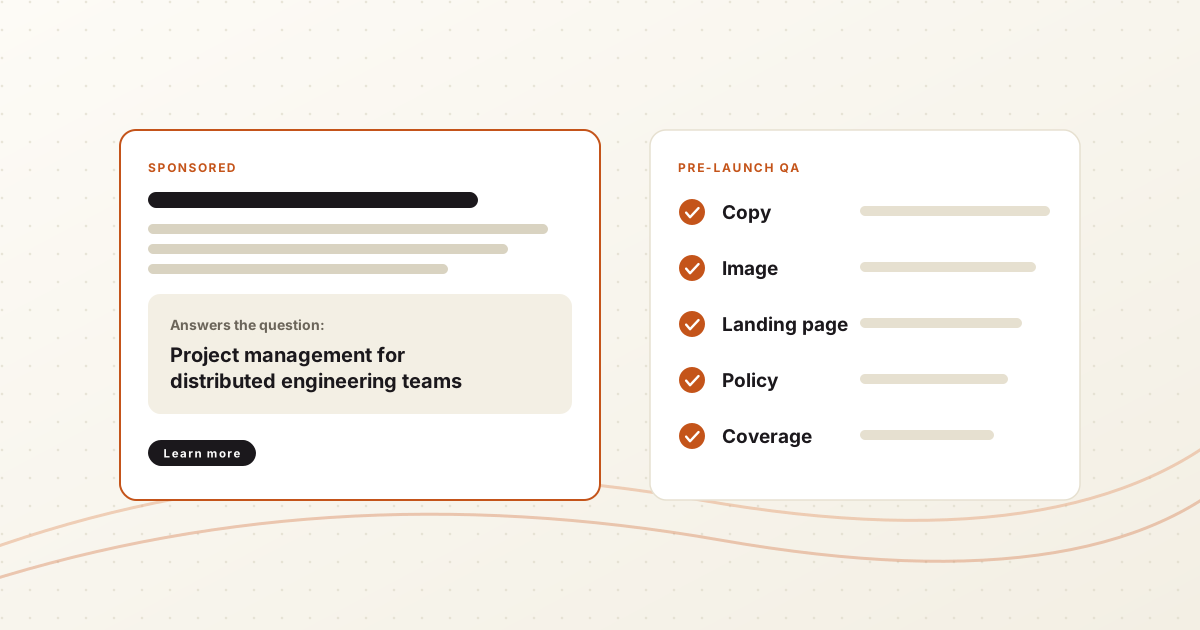
OpenAI reviews ads at three levels: the advertiser account, the creative assets (including copy, images, and video), and the landing page. According to OpenAI's ad policies, ads must be consistent end-to-end. An approved creative that links to a landing page introducing disallowed content will be rejected. Enterprise teams with complex product portfolios and multiple landing page owners need a defined creative approval process that covers all three levels before submission.
Measurement maturity
OpenAI supports conversion measurement through its Conversions API, pixel tracking, and integration with attribution partners including AppsFlyer, Adjust, Triple Whale, Northbeam, Branch, Singular, Kochava, Airbridge, and Tenjin, as confirmed in OpenAI's October 2026 measurement announcement. Advertisers receive aggregate performance metrics: impressions, clicks, and post-click conversion data. They do not receive personal identifiers or individual chat content.
An agency should be able to explain how they will integrate campaign data into your existing measurement infrastructure, which attribution partner they recommend for your use case, and what the reporting cadence and format will be.
Governance and reporting standards
Enterprise accounts require more than a monthly performance summary. Ask prospective agencies for a documented operating model that covers:
| Governance area | What to ask for |
|---|---|
| Account access | Named users only, with role-based permissions documented |
| Creative approval | Written workflow with sign-off stages and revision timelines |
| Policy monitoring | Process for identifying and responding to OpenAI policy updates |
| Brand name changes | Escalation procedure (changing brand name pauses delivery pending review) |
| Incident response | Defined steps if a creative is rejected or delivery is suspended |
| Reporting | Fixed cadence, agreed metrics, and a named contact |
Agencies that cannot provide documented answers to these questions are operating without the governance discipline that enterprise accounts require.
Brand Governance and Approval Workflows
For enterprise organisations, campaign governance is not a back-office concern. A brand name change in the Ads Manager pauses ad delivery until the new name is reviewed and approved. A legal name change restarts the full business verification process. These are operational risks that need to be managed through documented internal controls, not discovered mid-campaign.
Who approves what
Before the account is opened, the following responsibilities should be assigned in writing:
-
Marketing team: Sets campaign objectives, audience strategy, and budget parameters
-
Paid media or agency partner: Manages campaign setup, optimisation, and day-to-day operations
-
Brand team: Reviews and approves all creative assets before submission to the platform
-
Legal and compliance team: Assesses category eligibility, reviews ad copy for regulatory compliance, and signs off on landing page content
-
Information security team: Approves platform access, data flow configurations, and Conversions API implementation
-
Internal project owner: Holds the decision log and coordinates across functions
Surgelify recommendation: Assign a single named internal owner who holds the decision log. This person is not responsible for all decisions, but is accountable for ensuring decisions are made, documented, and accessible to all parties.
How creative, legal, and brand teams are involved
The platform reviews creative at the point of submission, not before. That means internal review must happen upstream. A practical creative approval process for enterprise teams looks like this:
-
Agency drafts creative (copy, images or video, and destination URL)
-
Brand team reviews against brand guidelines and tone of voice
-
Legal team reviews for regulatory compliance and accuracy of claims
-
Paid media lead confirms the landing page matches the approved creative
-
Named approver signs off and creative is submitted to the platform
-
Agency monitors approval status and escalates any rejection immediately
This process should be documented, with agreed timelines at each stage. Compressed timelines that skip legal review create compliance risk, particularly for regulated categories.
How decisions are documented
Every material decision should be recorded: eligibility assessments, creative approvals, policy interpretations, access grants, and budget authorisations. This is not bureaucracy for its own sake. If OpenAI modifies a policy, suspends an account, or rejects a creative, a documented decision trail allows the team to respond quickly and accurately rather than reconstructing context from memory.
Surgelify observation: Enterprise teams that treat ChatGPT Ads as a straightforward media buy, without the governance infrastructure applied to other regulated channels, are accepting unnecessary operational and reputational risk.
Brand Safety and Category Eligibility
Brand safety on ChatGPT Ads operates differently from traditional digital advertising. Because conversations are dynamically generated, there is no pre-published page to audit. OpenAI's placement controls assess whether a conversation is appropriate for advertising before an ad is shown.
What the platform controls
According to OpenAI's ad policies, ads will not appear near conversations involving:
Sensitive user contexts (no ads shown):
-
Personal health and mental health conversations
-
Emotionally reliant or vulnerable user interactions
-
Sensitive user journeys
Brand-unsafe content categories (no ads shown):
-
Child safety, cyber abuse, dangerous activities, fraud and deception
-
Graphic violence, hate and harassment, illicit content
-
Misinformation, obscenity, political content
-
Regulated goods including gambling and tobacco products
-
Suicide and self-harm, terrorism, weapons
Temporary Chats (where users have opted out of chat history) do not show ads. Personalised ads are not available in the European Economic Area or Switzerland, as confirmed by OpenAI's Help Centre.
Independent verification: still at pilot stage
For enterprise procurement processes that require independent third-party verification of brand safety controls, the current position is that this infrastructure is not yet fully operational. OpenAI is developing brand suitability evaluation pilots with DoubleVerify and Integral Ad Science, as announced in October 2026. These pilots allow independent partners to assess how OpenAI's safety standards are applied without accessing real user conversations.
Surgelify observation: Until these pilots produce published results, enterprise teams should document clearly in their decision log: which platform controls apply, which Negative Phrases they have configured, and at what budget cap the programme will run before an independent verification report is expected. This is the responsible position for any organisation with a formal brand safety policy.
Negative Phrases
For brand-specific exclusions that go beyond OpenAI's standard controls, eligible advertisers can configure Negative Phrases: a list of expressions that, if present in a conversation, will suppress ad delivery. This is the primary tool available to advertisers who need narrower placement controls than the platform's default guardrails provide.
Surgelify recommendation: Enterprise teams should define their Negative Phrases list before launch, with input from the brand team and legal counsel. This list should be reviewed quarterly and updated when brand guidelines or product positioning changes.
Category eligibility: a structured assessment
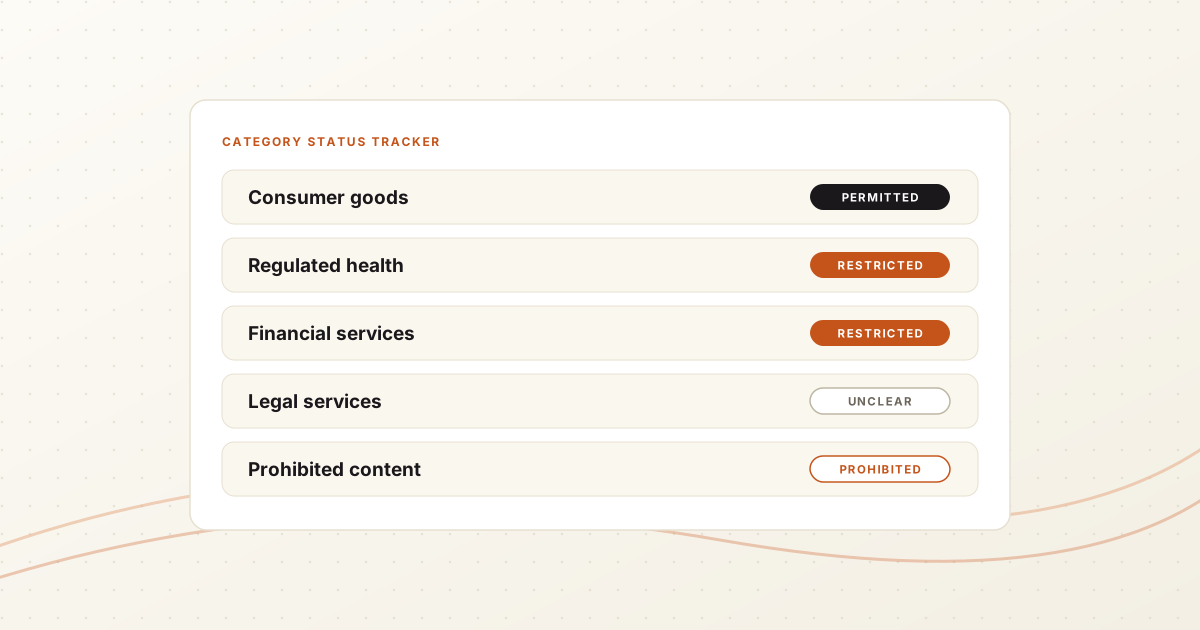
Eligibility is not binary. OpenAI's troubleshooting documentation sets out a detailed eligibility matrix for regulated categories. The key principle: a registered or licensed business is not automatically eligible for every advertising category or market. Eligibility must be assessed at the intersection of category, geography, and advertiser type.
For enterprise organisations with diverse product portfolios, each product line may require a separate eligibility assessment. A single general verdict for the organisation is insufficient.
UK and US Campaign Considerations
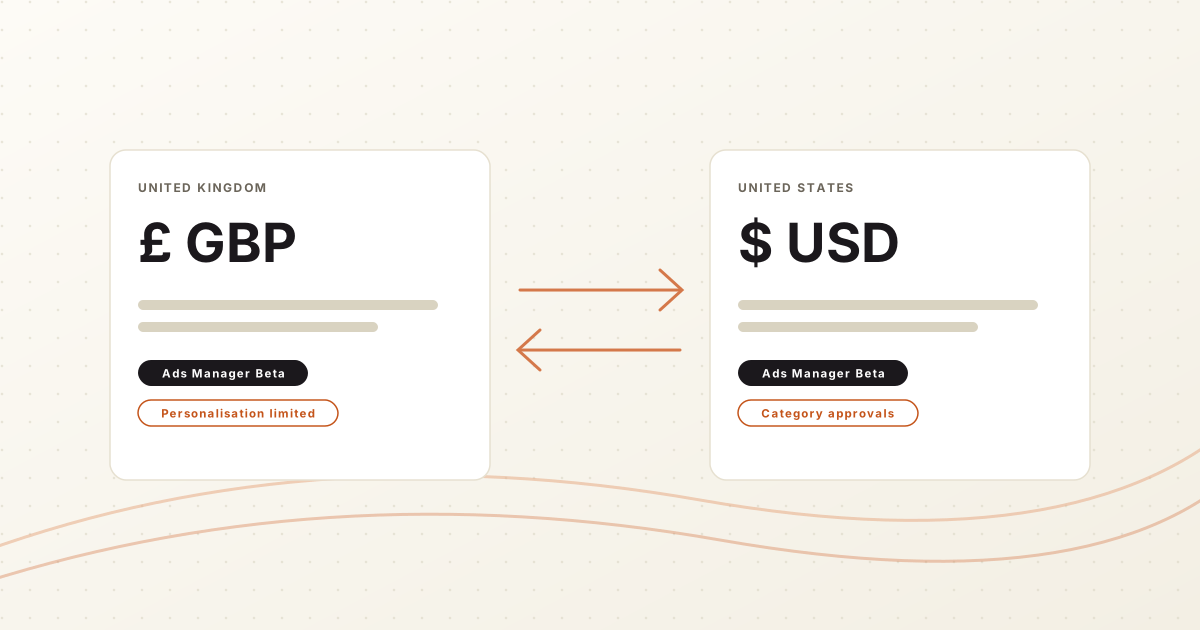
Enterprise teams running campaigns across both the UK and US markets face a set of structural differences that must be resolved before launch. These are not minor configuration details; they affect eligibility, delivery, account structure, and reporting.
Market availability
ChatGPT Ads launched in the US on 9 February 2026 and in the UK on 11 August 2026, according to OpenAI's testing announcement. Both markets are currently active. Advertiser access is determined by the country of the legal entity, not the country being targeted. An organisation whose legal entity is registered in the UK can access the Ads Manager, but must verify that its product categories are eligible in each target market separately.
Restricted categories: what differs between markets
The eligibility differences between the US and all other countries (including the UK) are material. The table below reflects OpenAI's published eligibility matrix as of 27 September 2026. These positions may change; always verify against the current policy before launch.
| Category | US | UK / All Other Countries |
|---|---|---|
| Financial services (general) | Case-by-case (select approved advertisers) | Severely restricted; most sub-categories not allowed |
| Insurance (excluding health) | Allowed | Restricted to select approved advertisers |
| Mortgages | Restricted to select approved advertisers | Restricted to select approved advertisers |
| Personal loans | Restricted to select approved advertisers | Not allowed |
| Health services (general) | Case-by-case (select approved advertisers) | Not allowed |
| Legal services | Allowed (licensed practitioners only) | Not allowed |
| Disease awareness campaigns | Allowed | Not allowed |
| Dietary supplements | Allowed | Not allowed |
| Financial software | Allowed | Allowed |
| Health software and infrastructure | Allowed | Allowed |
Surgelify observation: UK-based enterprise advertisers in financial services, healthcare, or legal services face substantially more restricted access than their US counterparts. This is not a temporary gap; it reflects OpenAI's current policy position for markets outside the US. Organisations in these sectors should not plan UK ChatGPT Ads campaigns based on US eligibility assumptions.
Account structure, currency, and time zones
When operating across both markets, enterprise teams must decide whether to manage UK and US activity through a single account or separate accounts. The practical implications include:
-
Billing currency: The Ads Manager bills in the currency associated with the account's legal entity. Cross-currency reporting requires reconciliation with finance teams.
-
Time zones: Campaign scheduling and reporting windows should be configured to reflect the intended market, not the account owner's local time.
-
Brand name consistency: The brand name displayed in ads is set at the account level and triggers a review if changed. Multi-market teams with different brand presentations in different markets need to resolve this before account setup.
Surgelify recommendation: For enterprise organisations running substantive activity in both the UK and US, Surgelify recommends establishing separate accounts per market. This simplifies billing, reporting, and policy management, and reduces the risk of a single account issue affecting delivery across both markets.
Differences that must be checked before launch
Before any multi-market campaign goes live, the following must be confirmed in writing:
-
Legal entity country and its effect on Ads Manager access
-
Product category eligibility in each target market
-
Landing page compliance with market-specific regulations (including ASA rules in the UK and FTC guidelines in the US)
-
Data handling and privacy compliance (UK GDPR for the UK market; CCPA for California-based audiences in the US)
-
Account structure, currency, and time zone configuration
-
Internal sign-off that the above has been reviewed by legal and compliance
Data, Privacy and Measurement
Measurement on ChatGPT Ads is more constrained than on established paid channels, and enterprise teams should agree the scope of what is measurable with internal stakeholders before committing to reporting frameworks.
What the platform provides
According to OpenAI's documentation, advertisers receive aggregate performance data: impressions, clicks, and post-click conversion signals. They do not receive:
-
Personal identifiers or user-level data
-
Individual chat content or conversation logs
-
Audience segment breakdowns based on personal attributes
Ad matching happens inside OpenAI's infrastructure using anonymised signals. The platform does not share chat history, memories, or personal details with advertisers.
What should be agreed internally before launch
Surgelify recommendation: Before the Conversions API or pixel is implemented, the following should be agreed between the marketing team, information security, and legal:
-
What conversion events will be tracked and how they are defined
-
Which attribution partner will be used and how it connects to existing measurement infrastructure
-
How ChatGPT Ads data will be integrated into existing dashboards and reporting systems
-
What data will flow between OpenAI's systems and the organisation's own systems, and under which legal basis
-
How long conversion data will be retained and by whom
For UK advertisers, data flows to and from OpenAI's systems should be assessed under UK GDPR. Because ChatGPT Ads uses contextual targeting rather than personal data for ad matching, the consent management burden is substantially lower than for behavioural advertising platforms. However, conversion tracking via the Conversions API does involve data transfer, and the legal basis for this should be documented.
What measurement cannot tell you
ChatGPT Ads reporting does not currently provide adjacency data: there is no report showing which conversation topics your ads appeared alongside. Independent brand safety verification through DoubleVerify and Integral Ad Science is in pilot, not production. This is a genuine limitation that enterprise teams should disclose to internal stakeholders rather than paper over.
Surgelify observation: Measurement on this channel is maturing rapidly. The attribution partner ecosystem now includes more than ten providers, and OpenAI has expanded its Conversions API integrations with Hightouch, Tealium, and LiveRamp. Enterprise teams should design their measurement framework to be extensible, not locked to the current state of the platform.
The Client-Agency-Platform Responsibility Matrix
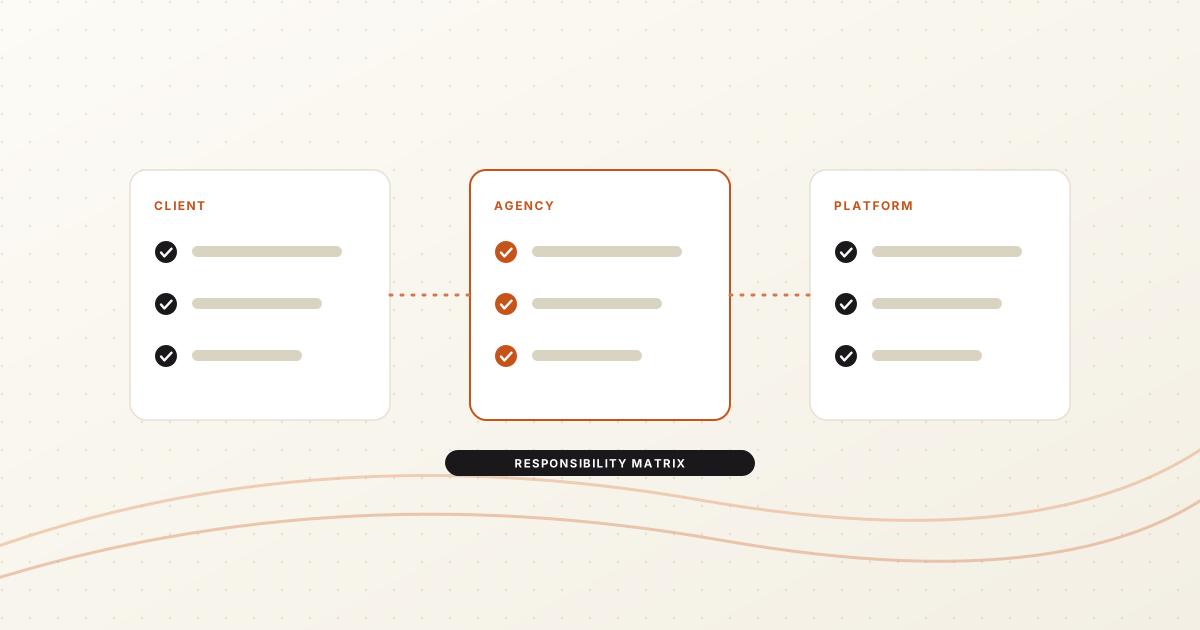
One of the most common sources of failure in enterprise paid media programmes is ambiguity about who owns what. The matrix below sets out how responsibilities are distributed across the client organisation, the agency partner, and the platform (OpenAI) for ChatGPT Ads.
This matrix reflects Surgelify's operating model for enterprise accounts. It should be reviewed, agreed, and documented before campaign launch.
| Responsibility | Client | Agency (Surgelify) | Platform (OpenAI) |
|---|---|---|---|
| Category eligibility assessment | Provides product and legal entity details | Conducts assessment, flags ambiguities | Sets and enforces policy |
| Account verification | Provides business documentation | Supports submission | Reviews and approves |
| Budget authorisation | Approves and controls | Executes within authorised limits | Processes billing |
| Creative drafting | Provides brand guidelines and source assets | Drafts and iterates creative | Reviews and approves/rejects |
| Creative legal review | Legal team reviews and signs off | Flags regulatory concerns | Not involved in pre-submission review |
| Landing page compliance | Owns landing pages; approves content | Reviews for policy consistency | Reviews at submission |
| Negative Phrases list | Defines brand exclusions | Configures and maintains | Enforces at delivery |
| Conversions API / pixel | InfoSec approves; provides server access | Implements and tests | Provides documentation |
| Attribution setup | Confirms preferred partner | Configures and validates | Provides data outputs |
| Reporting | Receives and reviews | Produces and presents | Provides aggregate data |
| Policy monitoring | Notified of changes | Monitors and escalates | Issues policy updates |
| Incident response | Final decision-maker | First responder; escalates | Handles account-level actions |
| Decision log | Holds internally | Contributes documentation | Not involved |
What Surgelify manages for enterprise teams
Surgelify operates as the agency layer in the matrix above. For enterprise clients, this means:
-
Pre-launch: Eligibility assessment, account setup guidance, Negative Phrases configuration, creative development, and measurement framework design
-
During campaign: Day-to-day campaign management, optimisation, policy monitoring, and weekly or fortnightly reporting to agreed stakeholders
-
Governance: Documented decision log, escalation protocols, and a named account lead for all client communications
-
Multi-market: Separate account management for UK and US activity, with market-specific creative and compliance review processes
Surgelify recommendation: Enterprise teams should require any agency partner to sign a written operating agreement that maps to this matrix before campaign launch. Verbal agreements about who manages what are not sufficient when a policy change, account suspension, or brand incident occurs.
To support enterprise procurement processes, Surgelify provides a downloadable Enterprise Vendor Evaluation Checklist and a completed version of this responsibility matrix as part of the initial engagement. These documents are designed to support internal sign-off and procurement review.
Enterprise Vendor Evaluation Checklist
Use this checklist when evaluating any agency for enterprise ChatGPT Ads management. Each item should be answered in writing by the prospective agency before the engagement is confirmed.
Platform knowledge
-
Can the agency demonstrate active Ads Manager access and account management experience?
-
Can they walk through the eligibility assessment for your specific product, legal entity, and target market?
-
Do they have a documented process for monitoring and responding to OpenAI policy updates?
-
Can they explain the difference between "allowed," "restricted to select approved advertisers," and "not allowed" categories?
-
Do they understand that advertising does not influence organic ChatGPT responses, and can they explain this clearly?
Governance and operating model
-
Does the agency provide a written operating agreement covering the client-agency-platform responsibility split?
-
Is there a named account lead and a defined escalation path for policy incidents?
-
Do they maintain a decision log for all material campaign and eligibility decisions?
-
Can they provide a documented creative approval workflow with defined timelines?
-
Do they have a process for handling brand name changes or legal entity changes that affect the account?
Brand safety
-
Can they explain OpenAI's placement controls and their current limitations?
-
Do they have a process for defining and maintaining the Negative Phrases list?
-
Can they advise on the current status of DoubleVerify and Integral Ad Science verification pilots?
-
Is there a written incident response plan for creative rejection or account suspension?
Measurement and data
-
Can they implement and validate the Conversions API for your preferred attribution partner?
-
Do they produce reporting in a format compatible with your existing dashboards?
-
Can they confirm what data flows between OpenAI's systems and your organisation, and under what legal basis?
-
Do they have a clear position on what measurement can and cannot currently tell you on this channel?
Multi-market capability
-
Have they assessed your eligibility separately for each target market?
-
Can they manage separate UK and US accounts with market-specific creative and compliance processes?
-
Do they understand the material differences in category eligibility between the US and UK?
-
Can they advise on ASA compliance for UK landing pages and FTC requirements for US landing pages?
Note: This checklist is a Surgelify advisory framework, not a legal document. It does not constitute compliance advice. Enterprise teams should engage their own legal counsel for regulatory assessments specific to their sector and jurisdiction.
Working with Surgelify on Enterprise ChatGPT Ads
Surgelify specialises in ChatGPT Ads management for enterprise and growth-stage organisations. Our approach is structured around the governance framework set out in this guide: documented eligibility assessments, written operating agreements, defined creative approval workflows, and measurement frameworks that integrate with your existing infrastructure.
For enterprise teams at the evaluation stage, we provide:
-
A written eligibility assessment covering your product, legal entity, and target markets
-
A completed client-agency-platform responsibility matrix for internal sign-off
-
A pre-launch governance checklist mapped to your organisation's internal approval processes
-
Named account management with a defined escalation path
ChatGPT Ads is a new channel operating under policies that are still evolving. The organisations that manage it well are those that apply the same governance discipline they bring to any regulated media channel, rather than treating it as a low-stakes experiment. The ones that encounter problems are those that move quickly without establishing who owns what.
If your organisation is assessing ChatGPT Ads for the first time, or reviewing an existing programme that lacks formal governance, speak with the Surgelify enterprise team to discuss your specific situation.
Primary sources referenced in this guide:
-
Ads in ChatGPT, OpenAI Help Centre — last verified 17 October 2026
-
OpenAI Ad Policies — last verified 17 October 2026
-
OpenAI Ads Policy Eligibility Table — last verified 17 October 2026
-
Testing Ads in ChatGPT, OpenAI — last verified 17 October 2026
Policy details on this page are verified monthly. ChatGPT Ads policies are subject to change without notice. Always check primary sources before making eligibility or compliance decisions.
Published: 17 October 2026 | Last updated: 17 October 2026 | Last verified: 17 October 2026 Reviewed by: Surgelify Enterprise Paid Media Team