In this guide
Key takeaways
- There is no control panel: OpenAI offers no brand portal, verified listing or direct correction mechanism.
- What you can change is the information environment the outputs are drawn from.
- The levers are entity consistency, the quality of your citation sources and content positioned for AI extraction.
- The guide separates what changes outputs over time from what does not.
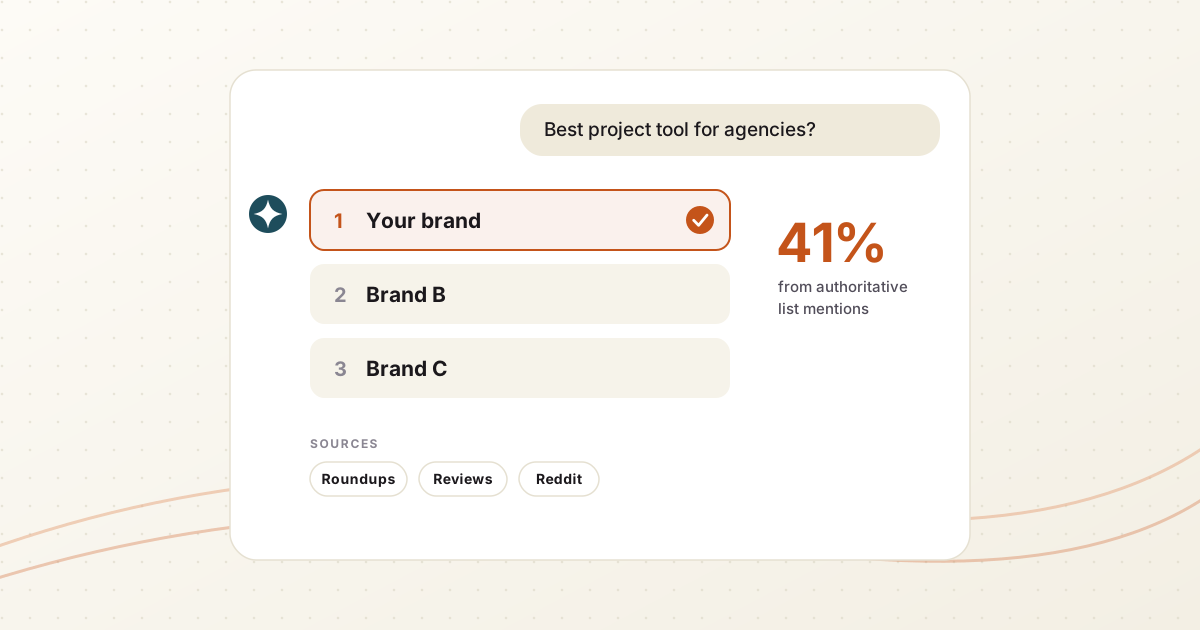
If you have searched your company name in ChatGPT and found the description wrong, outdated, or absent entirely, you are not alone. Marketing leaders and founders across every sector are discovering that AI systems have formed opinions about their brands, and those opinions are shaping buying decisions before a prospect ever visits their website.
The instinct is to look for a control panel. There is none. OpenAI does not offer a brand portal, a verified listing, or a direct correction mechanism. What exists instead is a set of systematic levers that influence how AI models understand, describe, and recommend your business over time.
The honest starting point: you cannot edit ChatGPT's outputs directly. You can, however, change the information environment those outputs are drawn from. That distinction matters because it reframes the problem from a technical complaint into a content and authority strategy, one that is entirely within your control.
This guide covers the five areas where that influence is real, measurable, and worth your attention.
1. Establish Entity Consistency Across the Web
Large language models do not read your website the way a human does. They build a probabilistic understanding of your brand from thousands of signals spread across the web: mentions, descriptions, categories, and associations that appear in articles, directories, reviews, and structured data.
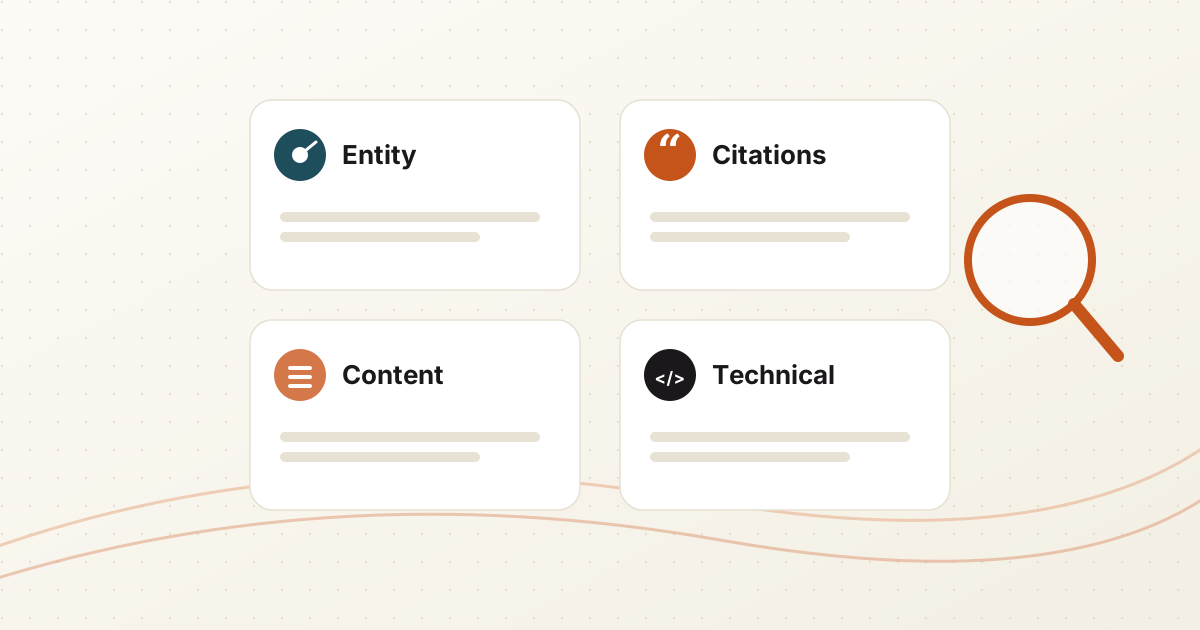
Four areas of real influence
Entity consistency
Make the same facts true everywhere the web describes you.
Citation sources
Improve the quality of the sources AI draws on.
AI extraction
Position content so answers can be lifted cleanly.
What changes outputs
Know what moves AI outputs over time and what does not.
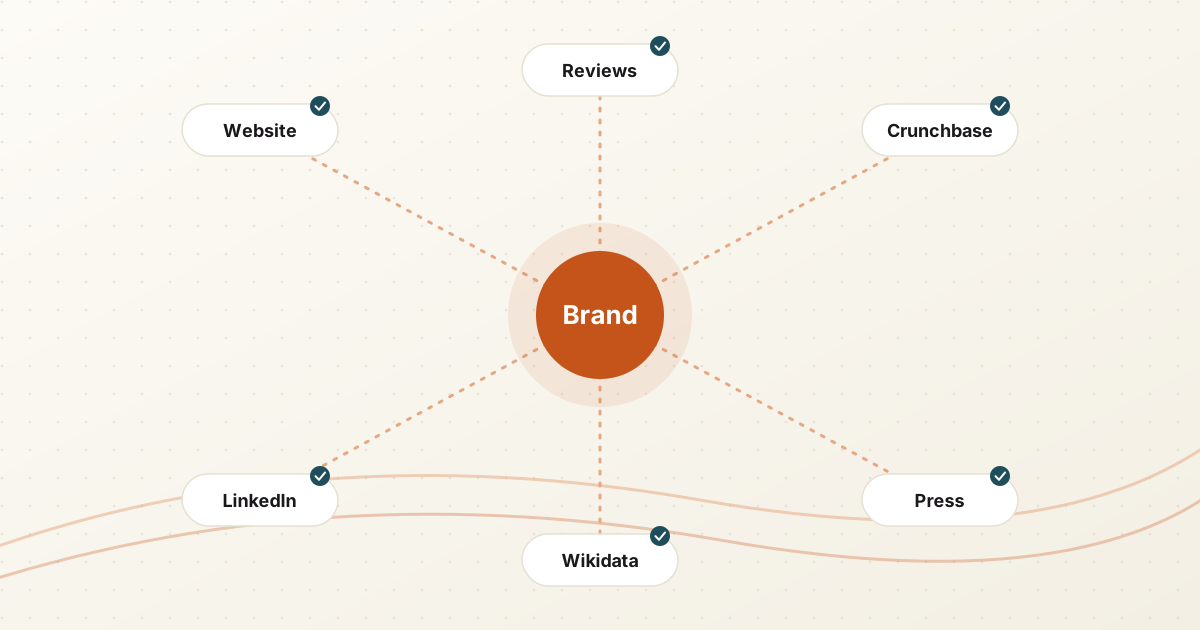
When those signals contradict each other, the model defaults to ambiguity or, worse, to whatever the most frequently repeated version happens to be. If your LinkedIn profile describes you as a "digital marketing agency," your Crunchbase entry calls you a "SaaS company," and a journalist described you as a "growth consultancy," ChatGPT will blend those descriptions into something that satisfies none of them.
Entity consistency is the foundation. Before anything else, audit how your brand is described across:
-
Your own website (homepage, About page, service pages)
-
Google Business Profile
-
LinkedIn company page
-
Crunchbase and Companies House
-
Industry directories and trade publications
-
Any third-party reviews or press coverage
The goal is a single, precise description of what you do, who you serve, and how you are categorised. That description should appear verbatim, or near-verbatim, across every authoritative source. AI systems are pattern-matching engines. Consistent signals win.
Structured Data Reinforces the Signal
Once your descriptions are consistent, encode them formally. Organisation schema markup, as documented by Google Search Central, allows you to declare your business name, URL, logo, social profiles, and founding information in a machine-readable format. The sameAs property is particularly useful: it lets you link your website entity to your profiles on LinkedIn, Wikidata, and other authoritative sources, telling AI crawlers that all of these entities refer to the same organisation.
This is not guaranteed to change what ChatGPT says tomorrow. It is, however, the kind of structured signal that accumulates authority over time.
2. Improve the Quality of Your Citation Sources
ChatGPT with search enabled, and AI models more broadly, draw heavily from sources they assess as credible. That assessment is shaped by domain authority, publication reputation, recency, and how frequently a source is referenced by other trusted sources.
If the only substantive coverage of your brand lives on your own website, you have a citation problem. Self-published content carries less weight than third-party corroboration. A brand that exists only in its own words is, from an AI perspective, a brand that has not yet been verified by the world.
Where to Build Citation Authority
The most effective citation sources are those that AI systems already treat as reliable. Focus your earned media and PR efforts on:
| Source type | Why it matters |
|---|---|
| Industry trade publications | High domain authority, topically relevant |
| National and regional press | Signals scale and credibility |
| Analyst and research reports | Positions you within a recognised category |
| Podcast appearances and transcripts | Generates indexable, quotable content |
| LinkedIn articles by named executives | Connects your brand to specific expertise |
The objective is not volume. A single well-placed feature in a relevant trade publication does more for your AI presence than fifty low-quality directory listings. Quality of source determines how heavily the signal is weighted.
A practical note on press releases: distributing a press release through a wire service creates dozens of identical copies across low-authority domains. AI systems recognise duplicate content and discount it. Original coverage, where a journalist writes about you in their own words, carries significantly more weight.
3. Position Your Content for AI Extraction
AI systems do not read content the way a search engine spider does, and they do not read it the way a human does either. They extract meaning from passages that are self-contained, clearly structured, and written in declarative language. Content that buries its key claims inside long paragraphs, relies on context from elsewhere on the page, or hedges every statement with qualifications tends to be poorly extracted or ignored.
This has direct implications for how you write about your brand.
Write in Extractable Patterns
The most reliably extracted content follows a simple pattern: a direct claim, followed by supporting evidence, followed by a clear implication. Consider the difference between these two approaches:
Poorly extractable: "We work with a range of businesses across different sectors to help them achieve their marketing goals through a variety of innovative approaches that are tailored to their specific needs."
Well extractable: "Surgelify helps mid-market and enterprise brands become visible in AI-generated recommendations. The company specialises in AI visibility strategy and ChatGPT Ads management, working with clients across professional services, technology, and ecommerce."
The second version gives an AI system something concrete to retrieve and repeat. The first gives it nothing.
Structural signals that help
-
Use clear H2 and H3 headings that describe what each section covers
-
Write FAQ sections with direct, complete answers (not answers that reference other parts of the page)
-
Include a concise "About" or "What we do" paragraph near the top of your homepage and service pages
-
Define your category explicitly: "We are a [category] that [specific function] for [specific audience]"
Content written for AI extraction is also, almost always, better content for human readers. Clarity is not a trade-off.
4. What Actually Changes AI Outputs Over Time (and What Does Not)
This is the section most guides skip, because the honest answer is inconvenient. So here it is plainly.
What works, given time
-
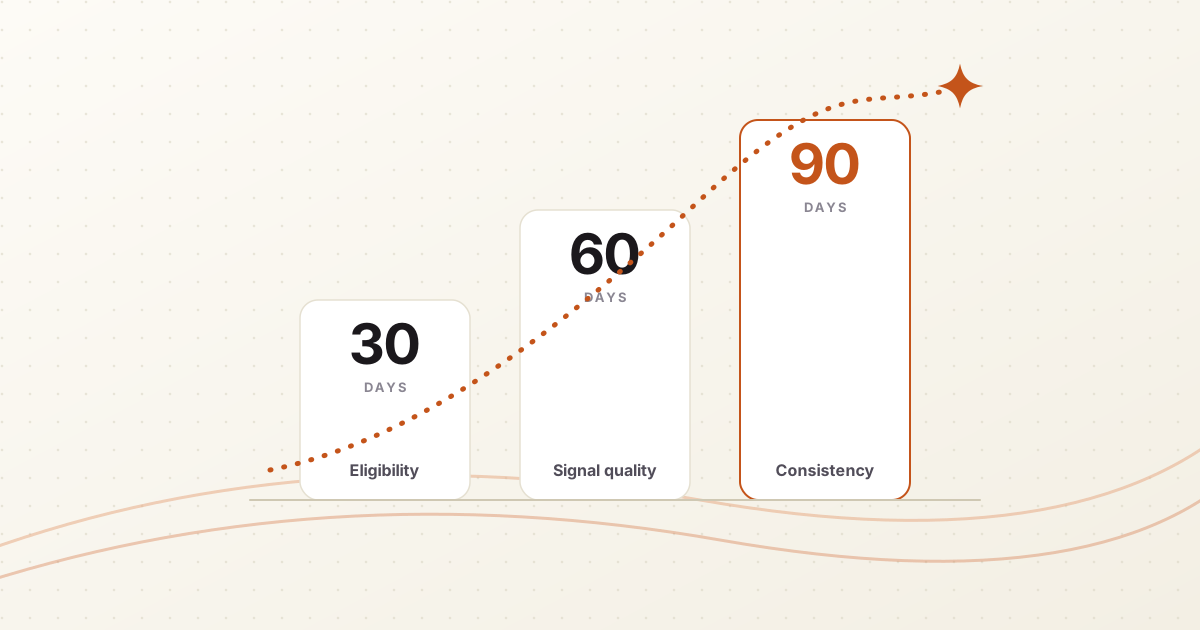
Consistent, high-quality third-party coverage. When credible sources describe your brand in the same terms, repeatedly, AI models update their representation of you. This is a slow process measured in months, not days, but it is the most reliable lever available.
-
Correcting factual inaccuracies at source. If a Wikipedia entry, a major publication, or a prominent review site describes your business incorrectly, correcting those sources directly is more effective than any technical fix on your own site. AI models weight third-party sources heavily.
-
Publishing substantive, category-defining content. Long-form guides, original research, and detailed methodology content establish topical authority. Over time, AI systems associate your brand with the problems you write about most clearly and most often.
-
Building a presence on Reddit and LinkedIn. Both platforms are heavily indexed and cited by AI systems. Genuine participation in relevant communities, where your brand is mentioned in context, creates the kind of organic signal that carries real weight.
What does not work
| Tactic | Why it fails |
|---|---|
| Submitting feedback to OpenAI | ChatGPT does not have a brand correction portal. Feedback affects safety training, not brand descriptions. |
| Publishing more pages on your own site | Self-published content is the weakest citation signal. Volume without authority changes nothing. |
| Keyword-stuffing your About page | AI models extract meaning, not keywords. Stuffed pages read as low-quality and are treated accordingly. |
| Paying for directory listings | Low-authority sources do not move the needle. They may actively dilute your signal if the directories are seen as spam. |
| Expecting quick results | AI training cycles and index updates operate on timescales of weeks to months. There is no shortcut. |
The part most coverage misses: the brands that appear most accurately and favourably in ChatGPT outputs are not the ones that optimised for AI specifically. They are the ones that built genuine authority, consistent positioning, and high-quality third-party coverage over years. AI visibility is a consequence of brand authority, not a substitute for it.
Where to Start
The framework above is not complicated, but it requires discipline and time. Most brands that struggle with their AI representation have the same underlying problem: their digital footprint is fragmented, their third-party coverage is thin, and their content is written for human readers skimming a page rather than AI systems extracting meaning from it.
Fixing that is not a single-day project. It is a strategic programme with a clear sequence:
-
Audit your entity consistency across all major platforms and correct contradictions
-
Identify your highest-authority citation gaps and build a targeted PR and content plan to fill them
-
Rewrite your core brand pages using extractable, declarative language with proper structured data
-
Monitor your AI presence over time, testing how ChatGPT, Perplexity, and other systems describe you as your information environment improves
If you want a clearer picture of where your brand stands today and a structured plan for improving it, book a strategy consultation with Surgelify. We audit AI brand representation, identify the specific gaps holding your visibility back, and build the authority infrastructure required to influence what AI systems say about your business, honestly and systematically.