In this guide
Key takeaways
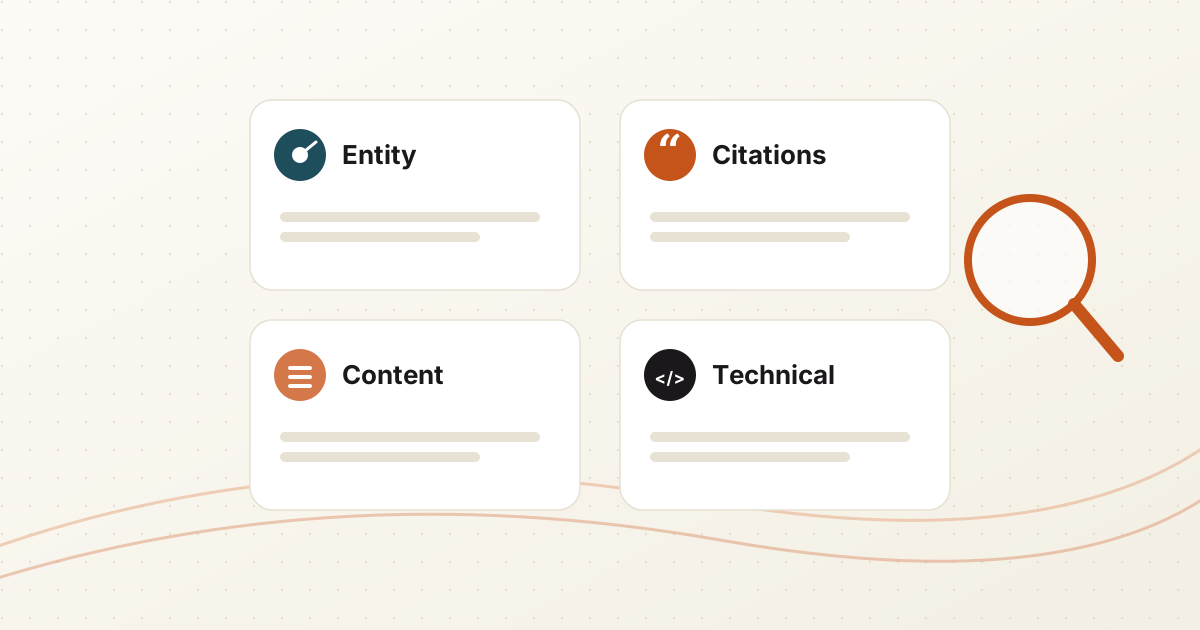
- An audit checks four things: entity signals, citation signals, content signals and technical signals.
- A basic manual audit takes two to three hours and gives you a working baseline across ChatGPT, Perplexity and Google AI Overviews.
- A professional audit adds structured benchmarking and prioritisation. The value is in knowing which fixes to do first.
- Fix entity inconsistencies first, technical barriers before content, then citations, then content, and re-test at least quarterly.
Most marketing leaders have encountered the phrase "AI visibility audit" in the last twelve months. Far fewer know what one actually involves, what it looks for, or what to do with the results.
That gap matters commercially. If your business is not visible in the AI systems your buyers use to research, compare, and shortlist providers, you are not competing for that consideration at all.
An AI visibility audit is a structured assessment of how well an AI system can find, understand, and recommend your business. It examines the signals that determine whether you appear in AI-generated answers, whether those appearances are accurate, and whether they occur at the moments that drive buyer decisions.
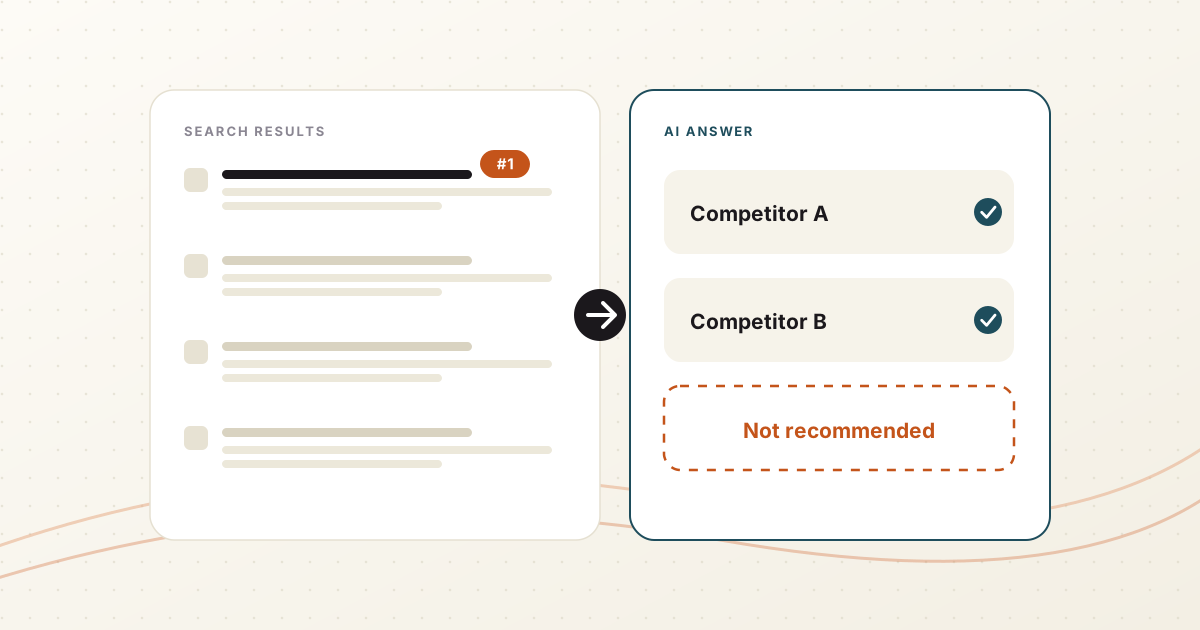
The core question an audit answers: Not "are we ranking?" but "are we being recommended, and to whom, and how accurately?"
This guide explains what a thorough audit examines, how to run a basic version manually, and what a professional audit adds beyond what you can check yourself.
The Four Signal Categories an AI Visibility Audit Examines
A credible audit does not treat AI visibility as a single metric. It evaluates four distinct signal categories, each of which influences how AI systems discover, interpret, and surface your business.
The four signal categories
Entity signals
How an AI system represents your business: name, category, services and relationships, consistent across the web.
Citation signals
The external sources that validate your business: reviews, publications, directories and comparisons.
Content signals
Whether your own site explains what you do, who you serve and answers the questions buyers ask AI.
Technical signals
Whether AI systems can crawl, access and correctly interpret your website.
1. Entity Signals
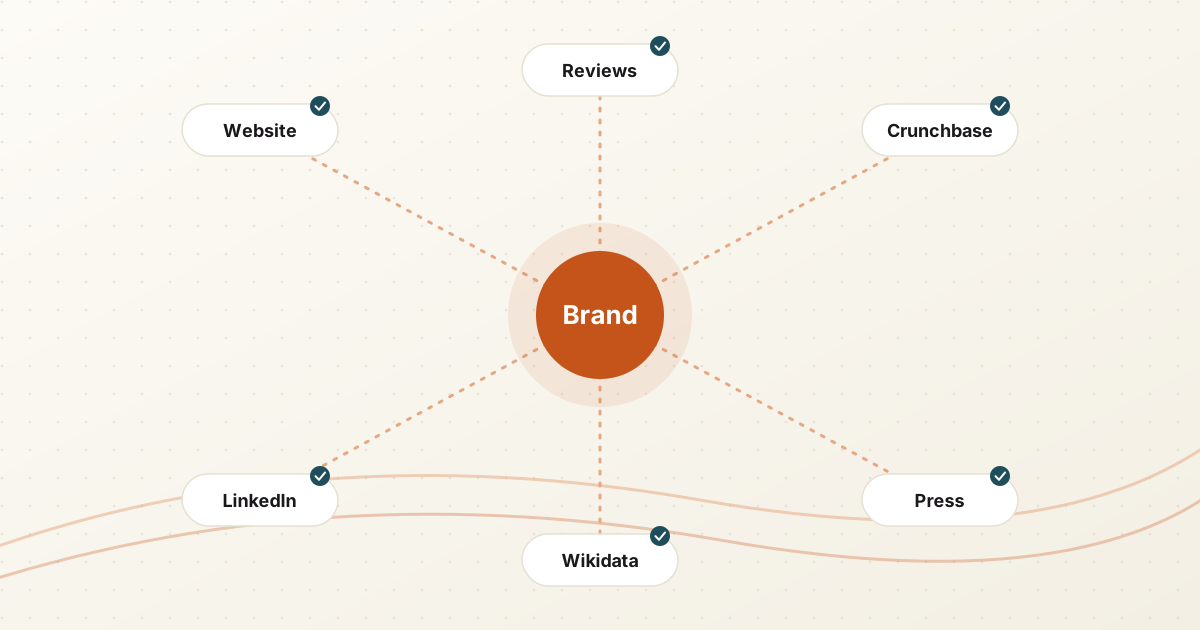
An entity is how an AI system represents your business as a concept. That includes its name, category, location, products, services, founding details, and relationships to other entities. AI systems build this picture from structured data, third-party sources, and consistency across the web.
The audit checks:
-
Whether your business is correctly identified and categorised by major AI systems
-
Whether your entity data is consistent across your website, Google Business Profile, LinkedIn, Companies House, and industry directories
-
Whether your products and services are described in language that matches how buyers actually search for them
-
Whether your entity relationships, including parent company, founders, and key partners, are accurate and discoverable
Inconsistency here is the most common and most damaging finding. An AI system that cannot confidently resolve what your business does will either omit it or describe it incorrectly.
2. Citation Signals
Citations are the external references that AI systems use to validate and reinforce their understanding of a business. When a model is asked to recommend a provider, it draws on sources it has been trained on and retrieves in real time: review platforms, industry publications, news coverage, directories, and third-party comparisons.
The audit checks:
-
Which sources currently reference your business, and in what context
-
Whether those references describe your business accurately and favourably
-
Which sources your competitors are cited in that you are absent from
-
Whether high-authority sources in your category mention you at all
Citation gaps are significant because they represent authority your competitors hold that you do not. An AI system with limited citation evidence about your business has limited reason to recommend it.
3. Content Signals
Content signals determine whether your own website gives AI systems enough structured, credible information to understand and accurately represent your business. This goes beyond SEO: the question is whether your content answers the questions AI systems are asked about businesses like yours.
The audit checks:
-
Whether your site clearly explains what you do, who you serve, and what outcomes you deliver
-
Whether your content addresses the comparison and evaluation questions buyers ask AI systems
-
Whether you have content that establishes authority on the topics your buyers care about
-
Whether your content is structured in a way that AI systems can extract and use
Thin content, vague positioning, and a lack of comparison-stage material are the most common findings in this category.
4. Technical Signals
Technical signals govern whether AI systems can access, crawl, and correctly interpret your website. Problems here can undermine strong entity, citation, and content work entirely.
The audit checks:
-
Whether your site is crawlable and indexable without significant technical barriers
-
Whether structured data (Schema.org markup) is implemented correctly for your business type
-
Whether page speed and Core Web Vitals meet the threshold required for reliable crawling
-
Whether your site architecture supports topical authority rather than fragmenting it
How to Run a Basic AI Visibility Audit Manually
A manual audit will not give you the systematic coverage or competitive benchmarking of a professional one, but it will surface the most obvious gaps and give you a working baseline. Set aside two to three hours and work through the following steps. In one simple exercise, you should be able to test your presence across at least three systems, compare your entity consistency across five core surfaces, and separate obvious technical issues from deeper positioning gaps.
Step 1: Test Your AI Presence Directly
Open ChatGPT, Perplexity, and Google's AI Overviews. Run a series of prompts that reflect how your buyers actually search, not how you would describe your own business. Examples:
-
"What are the best [your service category] providers in [your market]?"
-
"Who should I speak to about [the problem you solve]?"
-
"Compare [your business name] with [a named competitor]"
Record every response in full. Note whether your business appears, how it is described, whether the description is accurate, and which sources are cited. This is your baseline visibility snapshot.
Step 2: Check Your Entity Consistency
Search for your business name across Google Business Profile, LinkedIn, your website's About page, Companies House (if UK-registered), and any major industry directories. Compare:
-
Business name (exact spelling and formatting)
-
Category or sector description
-
Services listed
-
Geographic coverage
-
Contact details
Any inconsistency is a potential source of confusion for AI systems. Standardise these before any other work.
Step 3: Audit Your Citation Footprint
Use a tool such as Ahrefs or Semrush to identify which external domains reference your business. Then manually check whether those references are accurate and whether they appear in the types of sources AI systems are known to draw on: review platforms such as G2 or Trustpilot, industry publications, and comparison sites.
Separately, run the same check for two or three competitors. The gap between their citation profile and yours is a direct indicator of where AI systems have more evidence to recommend them over you.
Step 4: Review Your Content for AI Readability
Read your homepage, services pages, and About page as though you are an AI system trying to answer the question: "What does this company do, who is it for, and why should a buyer consider it?" Ask:
-
Is the answer to each of those questions explicit and easy to extract?
-
Do you have content that addresses comparison-stage questions (pricing, differentiators, use cases)?
-
Is your content structured with clear headings, concise paragraphs, and specific claims rather than marketing generalities?
Pages that are vague, jargon-heavy, or structured for aesthetics rather than clarity tend to perform poorly in AI retrieval.
Step 5: Validate Your Technical Foundation
Use Google Search Console to check for crawl errors and indexing issues. Use Google's Rich Results Test to verify that your structured data is implemented correctly. Check your Core Web Vitals score in Search Console under the Experience tab.
These checks will not tell you everything, but they will identify whether there are fundamental barriers preventing AI systems from accessing your content reliably.
What you will have at the end of this process: a working picture of where you appear, how accurately, what your citation footprint looks like relative to competitors, and whether your content and technical foundation are fit for AI retrieval. That is enough to prioritise the most urgent work.
What a Professional Audit Adds
A manual audit tells you where the most visible problems are. A professional audit tells you what is causing them, how they compare to your competitive set, and what order to address them in to produce the fastest commercial impact.
The differences are structural, not just a matter of depth:
| Dimension | Manual audit | Professional audit |
|---|---|---|
| AI system coverage | ChatGPT, Perplexity, Google AIO | 8-12 systems tested systematically |
| Prompt testing | Ad hoc buyer-intent queries | Structured prompt library across TOFU, MOFU, BOFU |
| Citation analysis | Surface-level domain check | Source-by-source authority and context scoring |
| Competitive benchmarking | Manual comparison of 2-3 competitors | Structured gap analysis across the full competitive set |
| Entity mapping | Visual check for inconsistencies | Structured entity relationship audit with remediation plan |
| Technical review | Crawl errors and basic schema check | Full structured data audit, crawl budget analysis, AI-specific rendering review |
| Output | List of issues | Prioritised remediation roadmap with commercial rationale |
The commercial value of a professional audit is not the discovery of more problems. It is the prioritisation. Most businesses that run a manual audit identify ten to fifteen issues and have no clear view of which three will move the needle on AI consideration-set inclusion. A professional audit resolves that ambiguity with evidence.
What to Do With the Findings
An audit is only useful if it produces action. The findings from any AI visibility audit, manual or professional, should feed directly into a prioritised remediation plan. A useful framework for sequencing that work:
Fix in this order
Fix inconsistencies first
Clear barriers before content
Build authority systematically
Rewrite for AI retrieval
Monitor at least quarterly
-
Fix entity inconsistencies first. These are the highest-leverage, lowest-effort fixes. Standardise your business name, category, and service descriptions across every platform. Until your entity data is consistent, other improvements will have limited effect.
-
Address technical barriers before content. If AI systems cannot reliably crawl and interpret your site, content investment is wasted. Resolve indexing errors, implement or correct structured data, and ensure your key pages are rendering correctly.
-
Build citation authority systematically. Identify the five to ten sources that AI systems in your category draw on most frequently. Prioritise earning accurate, substantive mentions in those sources rather than accumulating low-authority references at volume.
-
Rewrite content for AI retrieval. Revise your core pages to answer the questions AI systems are asked about businesses like yours: what you do, who you serve, what outcomes you deliver, and how you compare to alternatives. Clear, specific, structured content consistently outperforms vague positioning.
-
Monitor and re-test. AI systems update their understanding of businesses as new information becomes available. An audit is a point-in-time assessment. Set a cadence for re-testing your AI presence, at minimum quarterly, and track whether your consideration-set inclusion is improving.
The key distinction: An audit does not improve your AI visibility. The remediation work that follows it does. The audit's value is in ensuring that work is directed at the right problems in the right order.
Ready to Run a Professional AI Visibility Audit?
The manual process in this guide will give you a starting point. What it cannot give you is the competitive benchmarking, systematic prompt testing, and prioritised remediation roadmap that determine whether your AI visibility work actually moves commercial outcomes.
Surgelify's AI visibility audit covers all four signal categories in depth, tests your presence across the AI systems your buyers use, and delivers a prioritised action plan grounded in your specific competitive landscape.
Book a strategy consultation to discuss what an audit would cover for your business and what the findings are likely to show.