In this guide
Key takeaways
- Treat it as a sequencing question rather than a budget allocation question.
- Ads stop when the budget stops: within 48 hours of pausing, paid presence in ChatGPT drops to zero. Organic visibility works across platforms and tiers continuously.
- Independent research puts the overlap between Google's top 10 and AI citations at roughly 8 to 12 percent.
- The strongest strategy is often to run both in parallel.
Most marketing leaders frame this as a budget allocation question: put money into ChatGPT Ads or invest in organic AI visibility, then see which one performs. That framing produces a suboptimal answer almost every time.
The better question is sequencing. If you are deciding where to start, the right answer depends on your current organic baseline, your budget, and how quickly you need results.
This guide gives you a decision framework for choosing between paid and organic, shows where each one works best, and explains why the strongest strategy is often to run them together rather than treat them as separate bets.
A practical decision framework
There are three variables that matter most: how visible you already are in AI answers, how soon you need results, and whether you have budget to support both paid and organic at once. If you only want short-term traffic, paid can win. If you want durable visibility across AI systems, organic has to be part of the plan. The strongest answer is usually sequencing, not choosing one channel forever.
The core distinction: ChatGPT Ads buy placement below the AI's organic response, for users on the Free and Go tiers only, for as long as your budget runs. Organic AI visibility earns citations across ChatGPT, Perplexity, Google AI Overviews, Gemini, Copilot, and every other AI engine, for every user, continuously. Neither replaces the other. They solve different problems at different speeds.
What Each Channel Actually Does
Before comparing timelines and costs, it is worth being precise about what each channel controls, because the distinction is more fundamental than most coverage suggests.
Two different jobs
ChatGPT Ads
- Sponsored placement at the bottom of a conversation
- Labelled "Sponsored" and separate from the AI's answer
- Reaches users on the Free and Go tiers
AI visibility (GEO/AEO)
- Appears in the organic answer above any ad
- Works across all AI platforms and user tiers
- Built from content structure, citations and entity signals
ChatGPT Ads
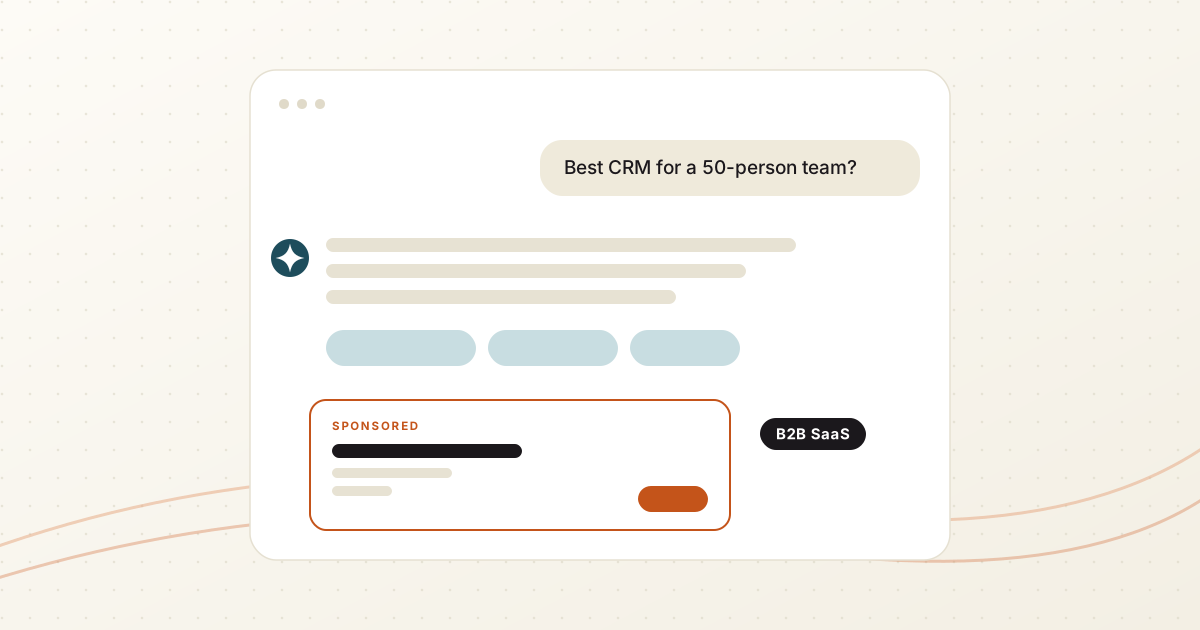
ChatGPT Ads are sponsored placements that appear at the bottom of a ChatGPT conversation, clearly labelled as "Sponsored" and entirely separate from the AI's answer. They reach only users on the Free and Go tiers. Anyone on Plus, Pro, Business, Enterprise, or Education plans sees no advertising at all.
What they control: placement visibility for a defined audience segment, for a defined period, in exchange for spend. When the budget stops, the placement stops. Within 48 hours of pausing a campaign, a brand's paid presence in ChatGPT drops to zero.
Organic AI visibility (GEO/AEO)
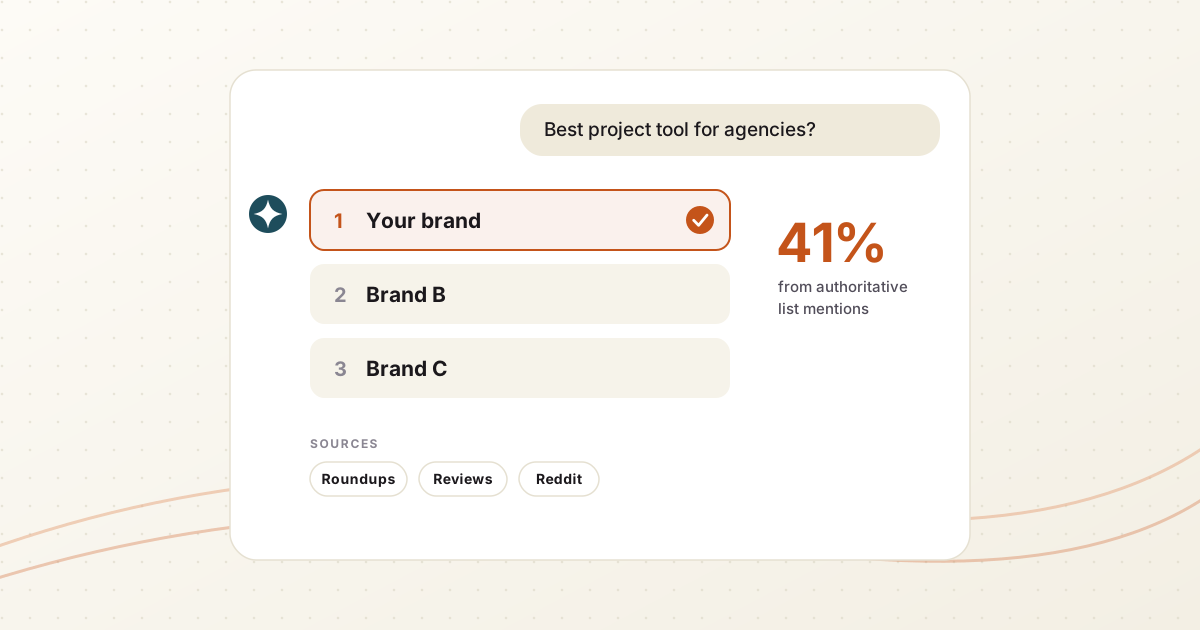
Organic AI visibility, also called Generative Engine Optimisation (GEO) or Answer Engine Optimisation (AEO), is the practice of building the authority signals that cause AI engines to cite and recommend your brand in their responses. This includes content structure, third-party citations, entity consistency across platforms, and technical accessibility for AI crawlers.
What it controls: whether your brand appears in the organic answer above any ad placement, across all AI platforms and all user tiers, continuously.
The structural fact that changes the calculation: independent research puts the overlap between Google's top 10 organic rankings and AI citations at roughly 8 to 12 percent. Ranking well on Google does not translate to organic AI visibility. The two systems use different signals, and most brands that assume their SEO foundation covers them in AI search are wrong.
Timeline and Cost: A Realistic Comparison
The timelines for each channel are genuinely different, and understanding that difference is what makes sequencing decisions tractable.
| Factor | ChatGPT Ads | Organic AI visibility |
|---|---|---|
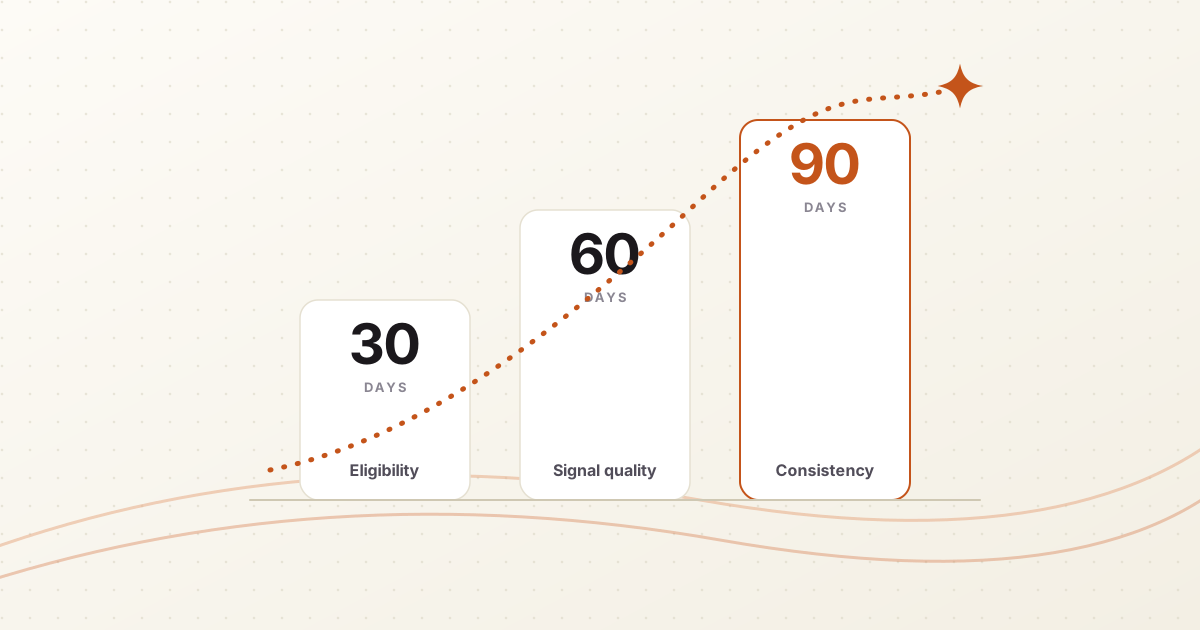
| Time to first results | Days (campaign goes live immediately) | 60 to 90 days for initial mentions; 4 to 6 months for consistent category visibility |
| Platforms covered | ChatGPT only (Free and Go tiers) | ChatGPT, Perplexity, Google AI Overviews, Gemini, Copilot, Claude, and others |
| User tiers reached | Free and Go only | All tiers, including Plus, Pro, Business, Enterprise |
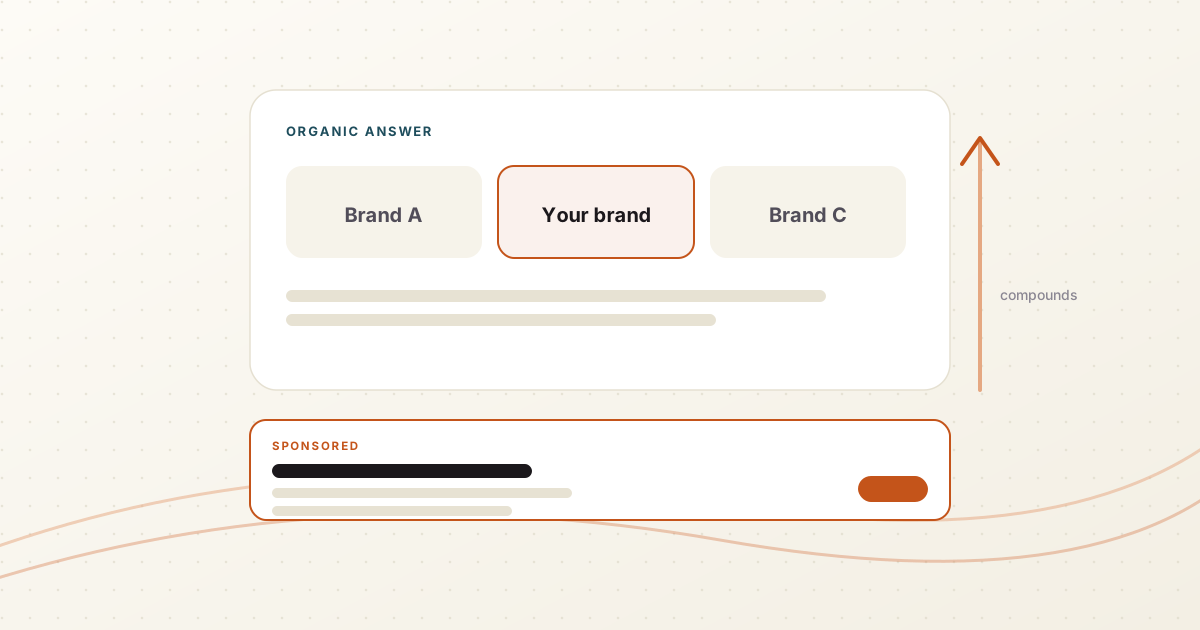
| Visibility when spend stops | Zero within 48 hours | Persists and compounds as authority builds |
| Minimum monthly cost | From £15/day (approximately £450/month) in ad spend, plus management | Agency retainers typically £2,000 to £5,000/month; content investment ongoing |
| Attribution | Direct (pixel, Conversions API) | Indirect (manual prompt testing, CRM tagging, branded search trends) |
| Competitive density | Low now; expected to increase over 18 to 24 months | Low now; building authority earlier compounds over time |
What the organic timeline actually means
The 60 to 90 day window before initial organic mentions appear is not dead time. It is the period during which the foundational work happens: schema implementation, entity consistency across directories, third-party citation building, and content restructuring for AI extraction. Brands that skip this phase and jump straight to paid activity are advertising into a context where the organic answer above their ad may feature competitors.
The practical consequence: if your brand has zero organic AI visibility today and you launch a ChatGPT Ads campaign, the AI's organic response above your sponsored card may name three competitors. Your ad appears beneath content that actively steers the reader away from you.
The Compounding Effect of Running Both in Parallel
The strongest argument for running paid and organic together is not simply that you get more coverage. It is that each channel makes the other more effective in specific, measurable ways.
How paid accelerates organic
ChatGPT Ads campaigns return creative performance signal within days. A headline that drives strong click-through rates in a sponsored placement is telling you something important: that framing resonates with buyers in a research or decision mindset. That language is a direct input for organic content. If "reduce project reporting time by half" outperforms "project management for teams" as an ad headline, the same framing should appear in your FAQ content, comparison pages, and structured data, the content that organic AI engines extract and cite.
Paid tests validate messaging. Organic content scales it.
How organic strengthens paid
When a brand already earns organic citations in AI responses, its paid placements operate in a different context. The buyer has seen the brand mentioned in the answer above the ad. The sponsored card is now reinforcing a brand they already encountered, rather than introducing one they have never heard of. This is the difference between a second touchpoint and a first impression, and it materially affects conversion quality.
Brands with strong organic AI visibility also have a natural floor. If paid activity pauses for any reason, organic presence continues. Brands relying solely on paid have no such floor.
The coverage gap that only organic fills
ChatGPT's Plus, Pro, Business, Enterprise, and Education tiers are permanently ad-free. These are, in many B2B categories, the most commercially valuable users: professionals who have committed to a paid AI tool. According to OpenAI, advertising only reaches Free and Go tier users. Organic citations reach everyone.
For B2B brands selling to senior buyers, agency teams, or enterprise accounts, the paid-only strategy structurally misses the highest-value segment of the ChatGPT audience.
The Decision Framework: When to Start With Paid, When to Start With Organic
The answer depends on three variables: your current organic AI baseline, your budget, and your time horizon. Here is how to think through each scenario.
Scenario 1: You have no organic AI visibility baseline
Start with organic. Add paid in month two or three.
If your brand does not currently appear in AI responses for category queries, launching paid activity first means advertising into a context where competitors dominate the organic answer. The first 60 days should focus on establishing the foundational signals: entity consistency, schema, third-party citations, and content structured for AI extraction. Once a baseline is established and initial organic mentions begin appearing, paid campaigns can amplify rather than fight against the organic context.
Scenario 2: You have some organic AI visibility but it is inconsistent
Run both simultaneously, with organic as the primary investment.
Inconsistent visibility means the foundation exists but is not yet reliable. Paid activity can generate immediate traffic and creative data while the organic programme strengthens the signals that drive consistent citation. Weight the budget toward organic (roughly 60 to 70 percent of combined investment) until mention rates stabilise.
Scenario 3: You have strong organic AI visibility and want to accelerate commercial results
Prioritise paid, using organic as the always-on layer.
If your brand already earns consistent organic citations for high-intent category queries, ChatGPT Ads can add a paid layer that captures decision-stage users with specific offers, demos, or conversion-focused creative. The organic foundation makes every paid placement more effective because brand recognition is already established in the answer above the ad.
Scenario 4: You have a time-sensitive campaign or product launch
Run paid immediately. Begin organic in parallel.
For launches, seasonal campaigns, or time-bound promotions, ChatGPT Ads provide immediate visibility that organic cannot match on a short timeline. Start organic work in parallel so that the authority built during the campaign period continues to compound after it ends.
The rule that covers most situations: organic AI visibility is the foundation; paid is the accelerant. Building on a weak foundation produces weak results from both channels. Building on a strong foundation means every pound of paid spend works harder.
What Good Looks Like in Practice
A well-structured integrated programme has three visible characteristics that distinguish it from two separate investments running in parallel without coordination.
Shared measurement baseline. Both channels are evaluated against the same prompt set. Organic visibility is tracked by monitoring 20 to 30 category prompts across AI engines weekly. Paid performance is evaluated against the same prompts to identify where ads are covering gaps in organic citation and where they are duplicating coverage the brand already earns for free.
Creative feedback loop. Ad creative performance informs organic content decisions on a monthly cadence. Headlines and value propositions that perform well in paid placements are tested as FAQ answers, comparison page headings, and structured content designed for AI extraction.
Budget allocation that reflects the organic timeline. In months one and two, the majority of investment goes toward organic foundations. From month three onward, as organic mentions begin appearing, paid activity scales up to amplify the organic context that is now in place.
The brands that will perform best on ChatGPT Ads over the next 12 to 18 months are not those that launch the fastest. They are those that build the organic foundation first, so that every paid placement lands in a context where the AI's own answer is already working in their favour.
Ready to Build an Integrated AI Visibility Strategy?
Surgelify works with ecommerce and B2B brands to plan and manage both ChatGPT Ads and organic AI visibility as a single, coordinated programme. Every engagement starts with a baseline assessment of your brand's current AI visibility across ChatGPT, Perplexity, Gemini, and Copilot, so you know exactly where you stand before committing budget to either channel.
Book a strategy consultation with Surgelify to get your AI visibility baseline, a clear sequencing recommendation based on your current position, and a programme structure that connects paid and organic investment into one measurable system.