In this guide
Key takeaways
- The question for UK marketers is what is actually available in the UK now and how it differs from the US rollout.
- UK campaigns face different data rules (UK GDPR and PECR), a smaller high-intent audience and fewer confirmed formats.
- The guide covers compliance, UK audience signals and creative, and a practical framework for a first campaign.
ChatGPT Ads are live. The real question for UK marketers is not whether the format exists. It is whether they understand what is actually available in the UK right now, how that differs from the US rollout, and what a responsible first campaign looks like under UK data law.
This guide answers all three. It is written for marketing directors and founders who have heard the noise around ChatGPT advertising and want a practical, accurate starting point rather than another round of speculation.
The short answer on UK availability: ChatGPT Ads are accessible to UK brands, but the rollout is more constrained than US coverage suggests. Understanding those constraints is the difference between a well-structured campaign and one that wastes budget on assumptions.
UK Availability: What Is Confirmed Right Now
OpenAI began testing advertising inside ChatGPT in 2025 and has since expanded access across a number of markets, including the UK. As of 2026, UK brands can access ChatGPT advertising through OpenAI's managed partner programme, which operates on a selective basis rather than a self-serve model open to all advertisers.
Here is what is confirmed for UK brands:
-
Managed access is available. UK advertisers can run campaigns through OpenAI's advertising partner network. This is not yet a fully open auction-based system comparable to Google Ads or Meta.
-
Sponsored content placements appear within ChatGPT conversations in contextually relevant moments, surfaced when a user's query aligns with a brand's product or service category.
-
Search-adjacent formats are the primary unit. These appear in response to high-intent queries and are labelled as sponsored, maintaining OpenAI's commitment to transparency.
-
Shopping integrations have been tested in the US and are in various stages of expansion. UK availability for shopping-specific formats is limited and product-dependent as of mid-2026.
What is not yet available in the UK: A fully self-serve campaign management interface comparable to Google Ads. UK brands currently access ChatGPT advertising through managed relationships or specialist agencies with partner access.
The pace of rollout matters here. OpenAI has moved deliberately, prioritising advertiser quality and user experience over rapid scale. That is commercially significant: early access is worth pursuing precisely because the competitive field is still narrow.
How UK Campaigns Differ from US Campaigns
The US rollout of ChatGPT Ads has benefited from a longer testing window, a larger advertiser base, and a regulatory environment that places fewer constraints on data use in advertising. UK campaigns operate differently in several important respects.
Targeting and Audience Scale
The US ChatGPT user base is substantially larger than the UK's, which affects audience volume estimates and reach projections. UK campaigns should be planned with realistic scale expectations: this is a high-intent, lower-volume channel, not a mass-reach platform. That distinction is commercially useful. It means ChatGPT Ads in the UK are better suited to brands with clearly defined buyer profiles than to those chasing broad awareness.
Data Permissions and Profiling
US advertisers operate under a patchwork of state-level privacy laws, giving them more flexibility in how they use behavioural and contextual signals for targeting. UK advertisers are subject to UK GDPR and the Privacy and Electronic Communications Regulations (PECR), which impose stricter requirements around consent, profiling, and the use of personal data in advertising contexts. This is not a disadvantage; it is a structural reality that shapes campaign design from the outset.
Format Availability
Some ad formats tested in the US, including certain shopping and product comparison integrations, are not yet confirmed for the UK market. UK campaigns currently centre on contextual, conversation-adjacent placements. Brands should not plan campaigns around US-specific format capabilities until those formats are confirmed for UK inventory.
| Dimension | US Campaigns | UK Campaigns |
|---|---|---|
| Access model | Managed + expanding self-serve | Managed / partner access |
| Audience scale | Larger user base | Smaller, high-intent audience |
| Data regulation | State-level patchwork | UK GDPR + PECR |
| Shopping formats | Available in testing | Limited / not confirmed |
| Competitive density | Higher | Lower (early-mover advantage) |
Compliance and Data Considerations for UK Advertisers
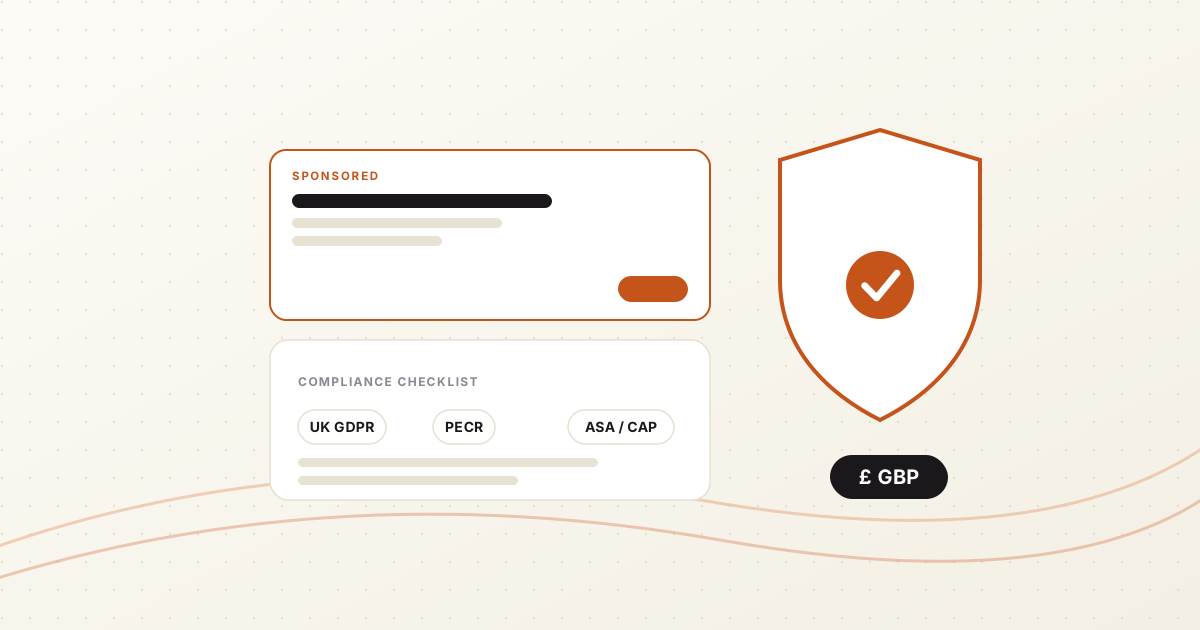
UK GDPR is not an afterthought in ChatGPT Ads planning; it is a structural input. Any UK brand running or preparing to run conversational advertising needs to address three specific areas before campaign activation.
Lawful Basis for Advertising Data Use
Under UK GDPR, using personal data to target advertising requires a valid lawful basis. For most commercial advertising contexts, this means either legitimate interests (with a documented balancing test) or explicit consent. The ICO's direct marketing guidance is the authoritative reference here. Brands that have not reviewed their lawful basis for digital advertising in the past 12 months should do so before entering a new channel.
Profiling and Automated Decision-Making
ChatGPT Ads operate in a contextual environment. The targeting signals available are different from cookie-based behavioural advertising, but profiling considerations still apply where personal data is used to serve targeted content. UK advertisers should document their data flows and confirm that any audience signals used in campaign targeting are consistent with their published privacy notices.
Transparency Obligations
OpenAI labels sponsored content within ChatGPT. UK advertisers have an independent obligation under the CAP Code and ICO guidance to ensure their advertising is clearly identifiable as such. This is not a new requirement, but it applies to new formats. Brands should confirm that their creative and landing experience meet existing UK advertising standards, including those set by the Advertising Standards Authority.
The practical implication: compliance is not a barrier to running ChatGPT Ads in the UK. It is a design constraint that, handled correctly, produces more trustworthy campaigns and reduces the risk of regulatory exposure as the format matures.
UK-Specific Audience Signals and Creative Considerations
ChatGPT Ads are not keyword auctions. They are contextual placements within a conversational environment, which means the signals that matter are fundamentally different from those that drive Google Search or Meta performance.
Audience Signals That Work in the UK Context
UK ChatGPT users skew towards higher-education, professional, and commercially active demographics. The conversations most likely to surface sponsored content are those involving research, comparison, and decision-making queries, precisely the moments where commercial intent is highest.
Effective UK audience signal strategy focuses on:
-
Category intent: What category of product or service is the user actively researching? This is the primary targeting lever.
-
Query sophistication: Users asking detailed, multi-part questions signal higher purchase readiness than those asking simple definitional questions.
-
Conversation stage: A user comparing two specific providers is further along the consideration journey than one asking what a category is. Campaign messaging should reflect this.
Creative That Resonates with UK Buyers
UK buyers respond differently to advertising than US buyers, and this distinction matters in a conversational format where tone is immediately apparent.
-
Directness over enthusiasm. UK audiences are generally more sceptical of overt promotional language. Creative that leads with a clear, specific value proposition outperforms creative that leads with excitement or superlatives.
-
Evidence before claims. UK buyers, particularly in B2B and considered-purchase categories, respond to specificity. A claim supported by a case study, a number, or a named outcome carries more weight than an unsupported assertion.
-
Respect the context. ChatGPT users are in a research or problem-solving mindset. Creative that acknowledges this and offers something genuinely useful, rather than interrupting the conversation with a sales pitch, will perform better over time.
Format note: Because ChatGPT Ads appear within a text-based conversational interface, copy quality is the primary creative variable. This is not a visual format. The discipline is closer to direct response copywriting than to display advertising.
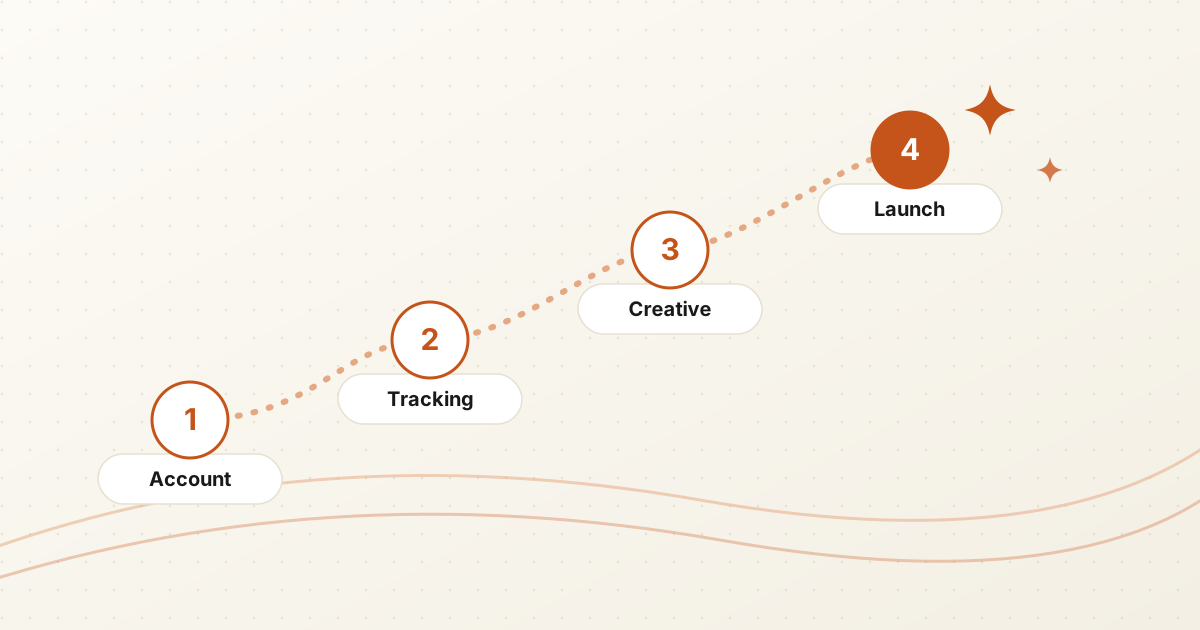
How to Start: A Practical Framework for UK Brands
Getting started with ChatGPT Ads in the UK is not a matter of opening a dashboard and setting a budget. The current access model requires a more deliberate approach. The following framework reflects what a well-structured entry into the channel actually looks like.
Step 1: Establish Your Commercial Objective First
Before any conversation about access, format, or budget, define what a successful ChatGPT Ads campaign looks like for your business. Is the objective qualified traffic to a specific landing page? Enquiry volume? Consideration among a defined buyer segment? The objective determines the campaign structure, the creative brief, and the measurement framework. Brands that skip this step tend to measure the wrong things and draw the wrong conclusions.
Step 2: Audit Your Data and Compliance Position
Review your privacy notice, lawful basis documentation, and data flows before activating a new advertising channel. Confirm that your approach to targeting data is consistent with UK GDPR and PECR. This takes days, not weeks, but it must happen before campaign launch, not after.
Step 3: Define Your Audience at the Conversation Level
Think about the specific queries your ideal buyer is likely to be asking in ChatGPT. Not keywords, but conversational moments. A founder researching "best B2B lead generation agencies in the UK" is a different audience signal from one asking "what is account-based marketing." Map your buyer's research journey and identify the conversation stages where your brand has the most relevant and credible thing to say.
Step 4: Build Creative for the Conversational Context
Write ad copy that fits a text-based, research-oriented environment. Lead with a specific, credible value proposition. Avoid superlatives and vague claims. Direct the user to a landing page that continues the conversation rather than interrupting it with a generic homepage or a disconnected offer.
Step 5: Access the Channel Through a Partner
Because UK ChatGPT Ads access currently operates through a managed model, working with an agency that has established partner access is the most direct route to market. This also gives you access to campaign intelligence, format guidance, and performance benchmarks that are not available to advertisers approaching the channel cold.
ChatGPT Ads represent a genuine commercial opportunity for UK brands willing to engage with the channel seriously. The access constraints are real, but they work in favour of early movers. The compliance requirements are manageable with the right preparation. And the creative discipline required, copy-led, context-aware, evidence-backed, is exactly the kind of advertising that builds durable commercial relationships rather than short-term clicks.
Surgelify manages ChatGPT Ads campaigns for UK brands, combining partner access with a strategy-first approach to conversational advertising. If you are ready to understand what a well-structured ChatGPT Ads campaign could look like for your business, book a strategy consultation with the Surgelify team.